Keep people housed
Stable work, lower living costs, genuinely affordable homes, and housing assistance can reduce the risk of losing housing.
Public safety means protecting residents from harm and addressing the conditions that can make families vulnerable. My approach connects accountability with better-paying work, lower living costs, housing stability, and a realistic path back into society.
A higher standard of living means more than higher wages. It means what those wages can actually buy.
I want Hawaiʻi to produce more of what we need, create higher-paying careers and reduce the cost of everyday life. Local needs should come first, with viable surpluses for export.
That means expanding productive industries beyond farming alone: ranching, food processing, manufacturing, machinery repair, refrigeration, logistics, and technical services. Technology, automation, and SI should help workers become more skilled and productive, rather than making permanent low wages the business model.1
It also means addressing the cost of housing, energy, groceries, taxes, and government waste. Local production cannot simply be assumed to lower prices: the test is whether residents gain purchasing power and security.

Economic security and stable housing may reduce some conditions associated with offending. They do not prevent every type of crime.
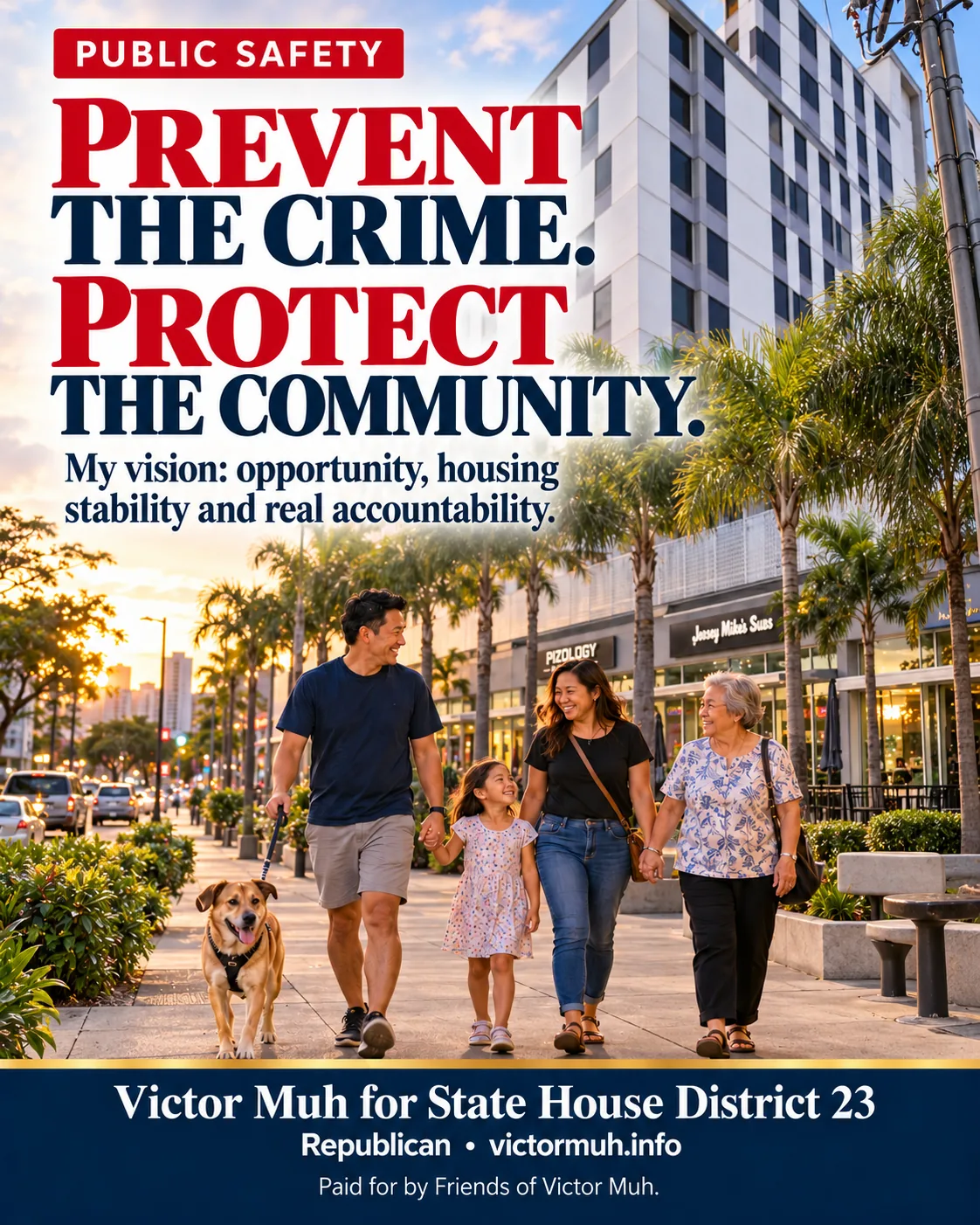
Better legitimate earning opportunities, more stable housing, and meaningful support for people returning from incarceration can be part of prevention. Research on earnings and recidivism suggests effects may differ by offense and cannot be applied uniformly to violence or every other crime.2
Making more existing homes available to residents may help prevent some housing losses, and housing with services can support people who need a pathway out of instability. The effects of this specific set of proposals have not yet been measured in Hawaiʻi.
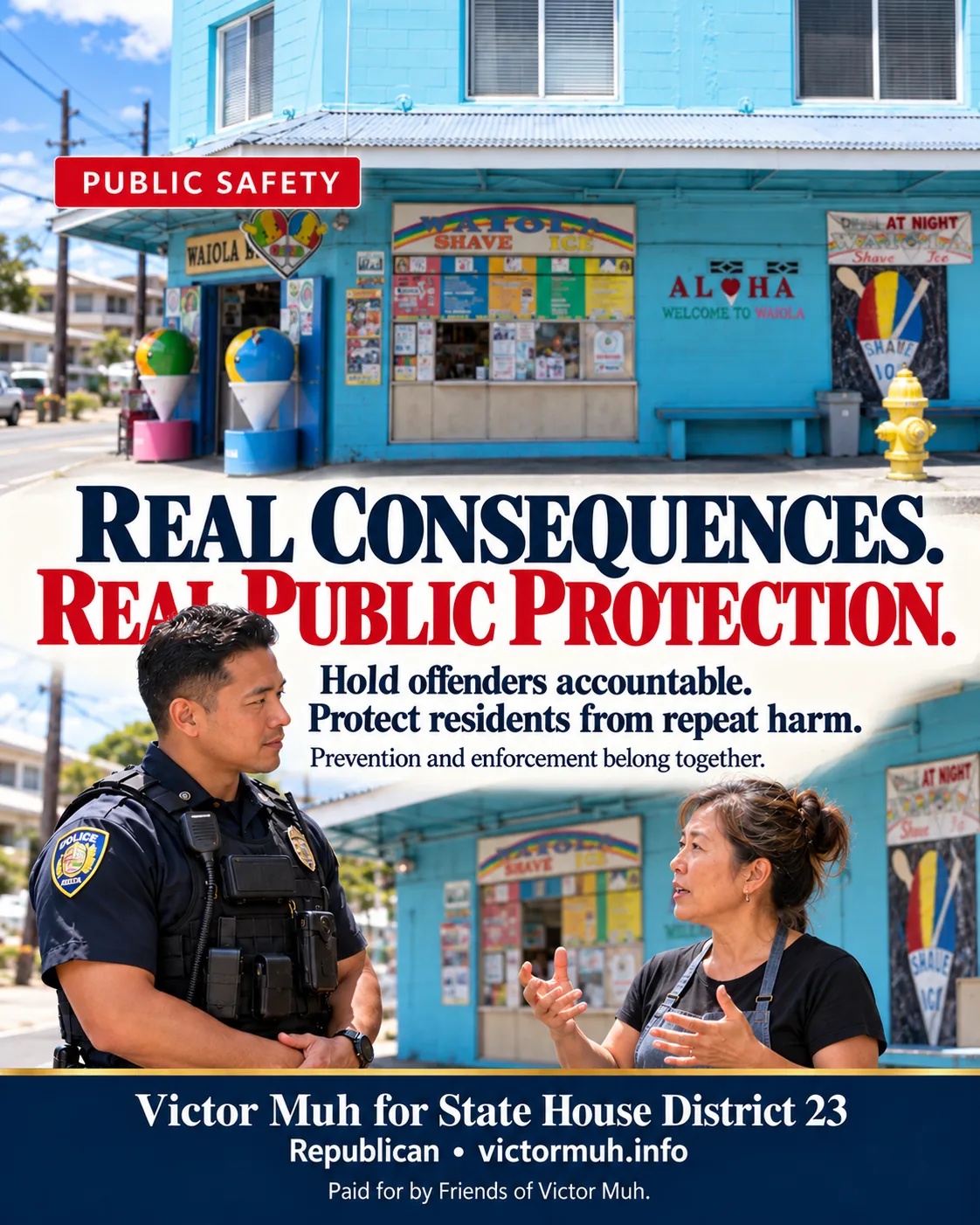
Prevention is not an alternative to enforcement. Residents also need prompt responses to harm, protection of victims, due process, and appropriate consequences for offenders.
Safer communities require both a credible justice system and practical efforts to prevent repeat harm.
I support effective law enforcement, constitutional rights, due process, and appropriate consequences for people who commit crimes. Protecting residents and victims must remain central.
The National Institute of Justice's deterrence review distinguishes the certainty of apprehension from simply increasing the severity of punishment; certainty is more consistently associated with deterrence.3
Successful reentry also matters. Employment, useful skills, stable housing, and access to support can help people rebuild lawful lives, without erasing accountability for wrongdoing.
Increasing the housing inventory available for year-round resident use is different from adding new buildings.
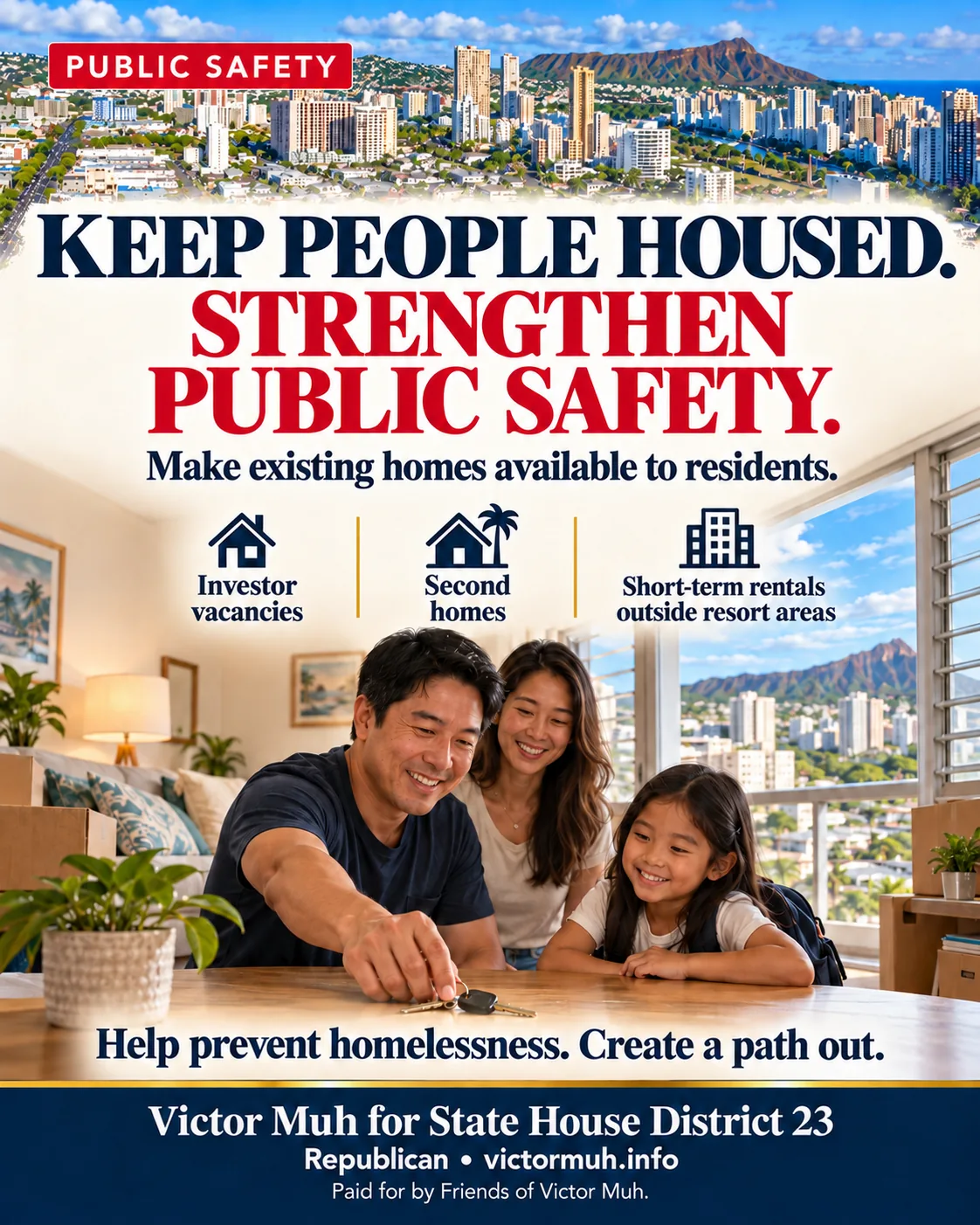
My housing strategy examines Oʻahu's existing stock and seeks to reduce competing uses: prolonged investor-held vacancies, second homes, and short-term rentals outside resort areas. A home already rented long-term to a resident is part of the resident housing stock, regardless of where its owner lives.78
I would assess usable housing across Oʻahu instead of excluding homes solely because they are distant from downtown. The important questions are whether homes can legally and practically return to resident use, what they cost, and whether people can live there.
Working with county government, I would seek higher tax burdens on vacant investment property and second homes, higher rates on short-term rentals outside resort areas, and property-tax relief for primary residences and qualifying long-term rentals to residents. Specific rates and a balanced revenue plan have not been established; real-property taxation is primarily a county responsibility.9
Greater access to genuinely affordable resident housing could help households avoid homelessness and provide housing options for people leaving shelters and reentry programs. Availability alone does not ensure affordability.1011
Rent to Ownership would turn suitable public rentals into resident-owned condos, allowing families to build equity without removing homes from the long-term resident-serving supply.
Under my proposal, qualified public-housing residents could buy appropriate units as affordable, owner-occupied condominiums. The dwelling would remain in a controlled resident-serving program rather than entering unrestricted resale. When an owner leaves or dies, the State or designated government housing entity would buy the unit back. The unit itself would not pass to heirs, but the family's accumulated equity could.
My clarified buyback position: the State would never confiscate the condo outright. If a qualifying criminal conviction were to trigger a mandatory sale under future program rules, the State would buy the condo back and pay the owners their equity.
That proposed incentive has not been shown to deter crime. The qualifying offenses, affected household members, equity valuation, mortgage treatment, hearing and appeal procedures, and legal authority still need to be defined. Existing Hawaiʻi housing buyback provisions and federal public-housing homeownership law are useful references but do not themselves authorize this specific conviction trigger.131415

Making resident housing more available may help with prevention. People already experiencing homelessness need different levels and kinds of assistance.
Stable work, lower living costs, genuinely affordable homes, and housing assistance can reduce the risk of losing housing.
Some people need mental-health treatment, substance-use care, supportive housing, or long-term assistance in addition to access to homes.5
People leaving shelters or reentry programs need workable long-term housing, not just a temporary placement.
An Agricultural Reentry Campus would connect temporary housing, legitimate paid work, transferable skills, and a route to independence for eligible voluntary participants.
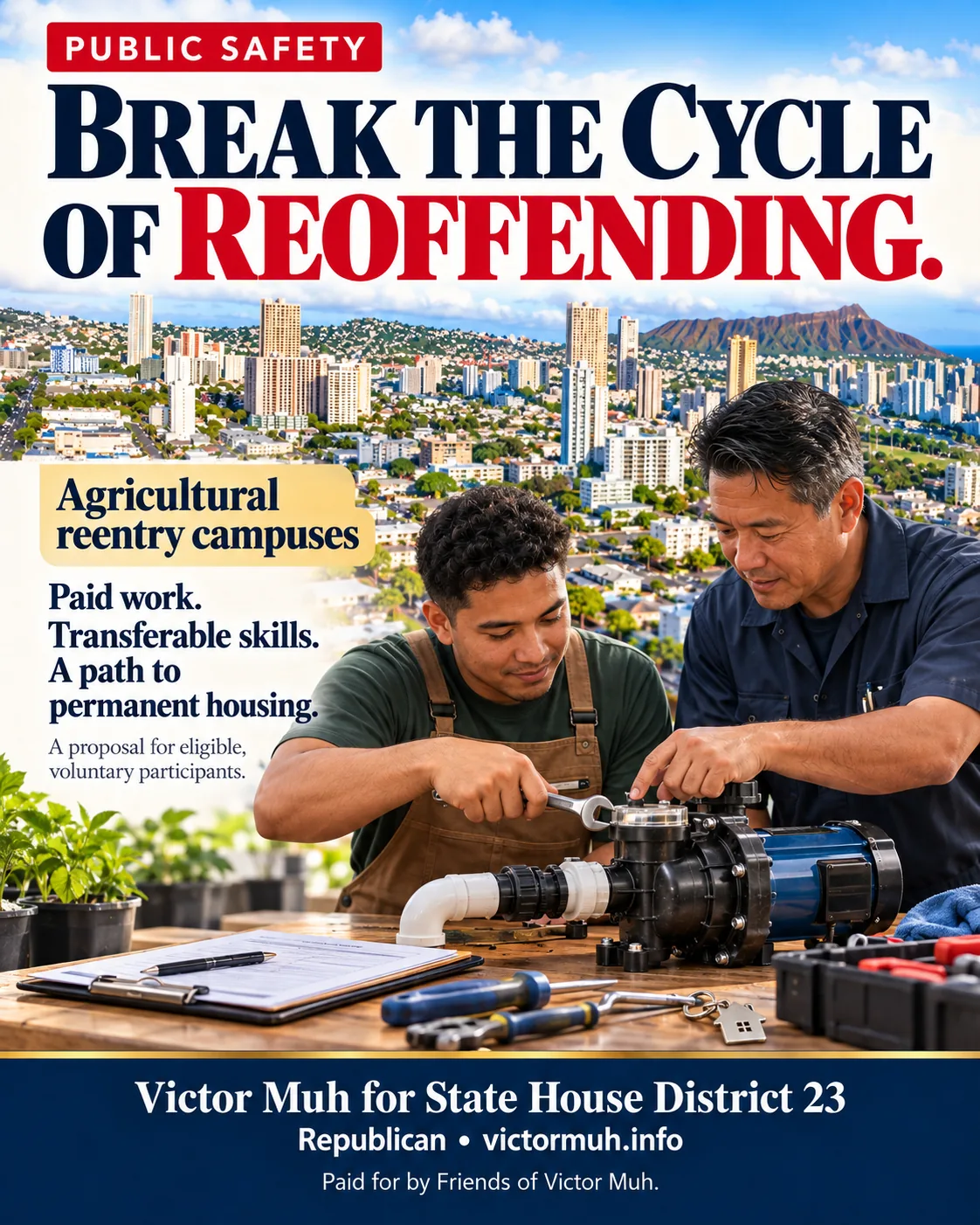
Participants approved for community-based placement could live temporarily on a supervised campus while earning real wages in bona fide agricultural, food-processing, maintenance, logistics, or related operations.
Training would lead to recognized credentials and careers inside or outside agriculture. Case management, transportation, treatment when needed, identification, financial education, and savings would support the transition to normal life and permanent housing. This is not a plan for unpaid or cheap farm labor.
Transitional employment research supports examining structured reentry supports, but it does not establish that the agricultural-campus model itself reduces recidivism or outperforms other programs.4 Site, operator, land-use authorization, costs, supervision, and housing exits require further work.
The intended approach links economic stability and housing access to crime prevention, and pairs those efforts with effective enforcement and accountable reentry.
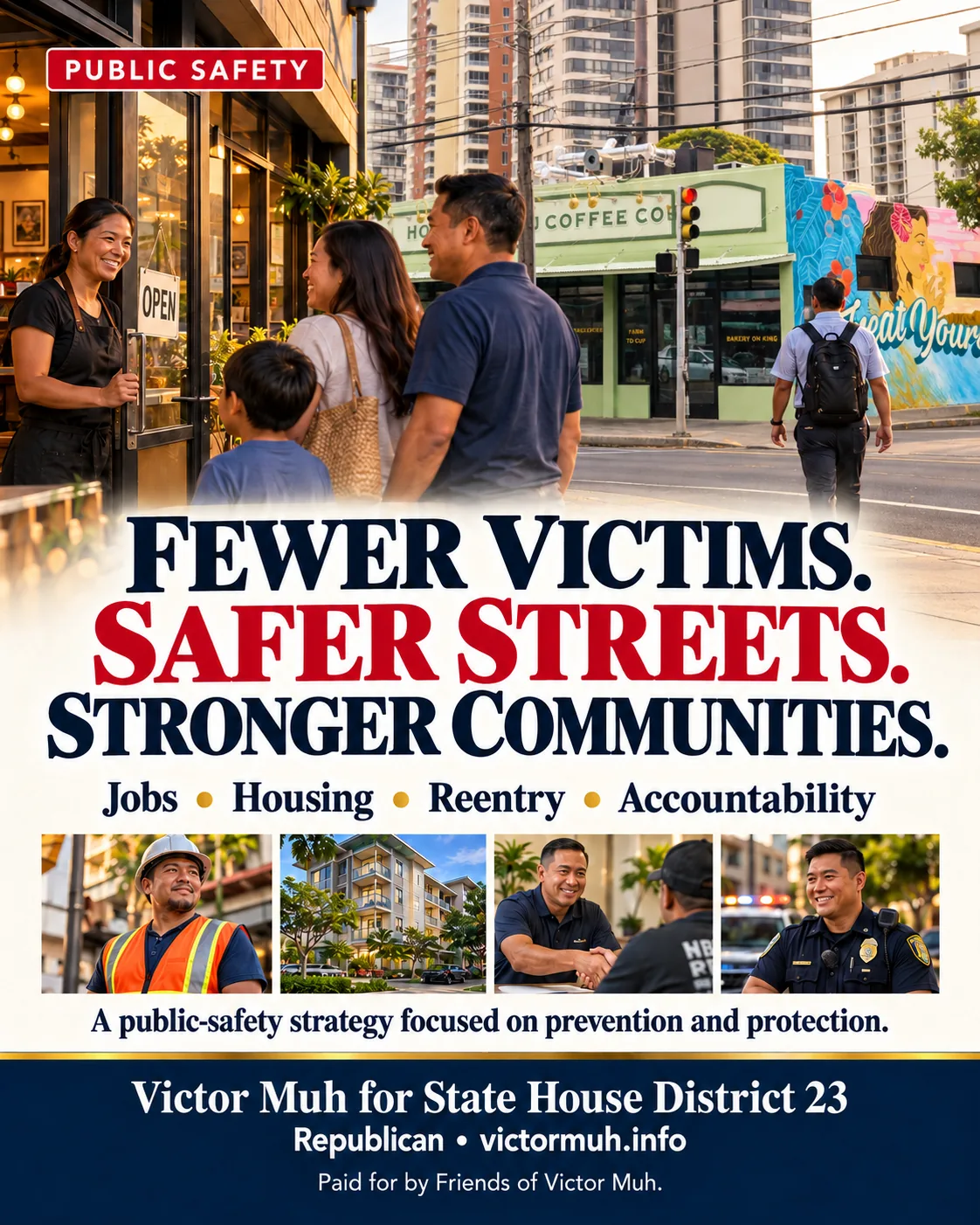
These are policy proposals and research connections, not proof of a predicted reduction in crime, homelessness, or household costs.
Measure resident earnings, productivity, cost of essentials, and local value added. Evaluate whether proposed tax changes are fiscally workable.
Count net homes actually returned to year-round resident use, affordable rents and ownership costs, prevented housing losses, and lasting housing stability.
Track employment, wages, permanent housing, repeat offending, victimization, and public expense with appropriate comparison groups.
Establish legal authority and program design for condo buybacks and reentry campuses. Do not treat treatment methods or relocation arrangements as finalized.
The existing Housing, Workforce, Agricultural Reentry, and Agriculture & Technology pages contain more detailed proposal design and supporting context. They remain the reference for those topics. No new housing inventory or crime-reduction statistic is asserted here.
Sources support particular mechanisms and program contexts, not a guaranteed outcome for any proposal. Policy implementation requires legal, fiscal, and program review.